The Shield of Air Power: Inside the RAF Regiment’s Layered Counter-Drone Doctrine
By Allied Dispatch UK
FORCE PROTECTION | Deep Dive
In modern warfare, the "front line" is no longer a trench; it is the perimeter of the airfield. As uncrewed aerial systems (UAS) evolve from hobbyist tools into lethal loitering munitions, the RAF Regiment has undergone a radical transformation.
At the heart of this evolution is "Layered Defence"—a multi-tier approach to protecting the RAF’s most expensive assets from the world’s cheapest threats.
Tier 1: Detect – The Unblinking Eye
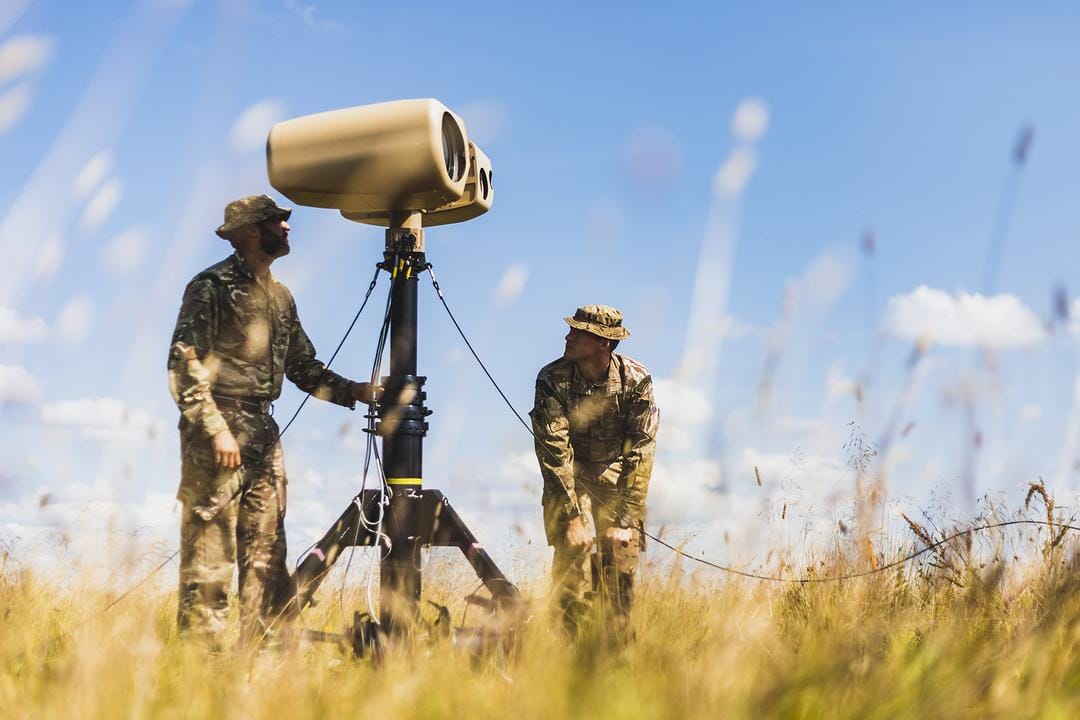
The first layer is situational awareness. Using the ORCUS system, RAF Regiment operators monitor the radio frequency (RF) spectrum and use advanced radar cross-section analysis to spot drones miles away.
- Tech Spotlight: ORCUS utilises Ultra Long-Range Thermal Imaging cameras to track "dark" drones that aren't emitting signals, ensuring that even stealthy UAS can't slip through the net.
Tier 2: Disrupt – The Silent Strike
Once a threat is identified, "Soft-Kill" options are engaged. This is where the NINJA system comes into play.
- Electronic Warfare: Instead of blowing the drone up, NINJA can jam the control link or even "hijack" the drone, forcing it to land safely.
- Intelligence Advantage: Capturing a drone intact is often more valuable than destroying it. It allows G2 (Intelligence) teams to analyse the flight logs, serial numbers, and origin points of hostile technology.
Tier 3: Defeat – The Final Safeguard
If electronic countermeasures fail or the drone is "autonomous" (meaning it doesn't rely on a control signal), the RAF Regiment moves to the kinetic layer.
- Rapid Sentry: This provides a final, high-lethality safeguard. Using precision-guided kinetic interceptors, the Regiment can physically neutralise a drone before it impacts aircraft or infrastructure.
The Allied Network: A Common Tactical Picture
A critical takeaway from 2026 operations is that the UK never fights alone. Whether on Operation Glendine or in the Middle East, RAF Regiment C-UAS teams are digitally integrated with US and NATO partners.
- Interoperability: By sharing data from ORCUS and other sensors, coalition forces create a unified "dome" of protection over airbases, ensuring that a threat detected by a British sensor can be neutralised by an allied asset if necessary.
Allied Dispatch Analysis: The Force Protection Revolution
The Commandant General of the RAF Regiment, Air Commodore Paul Hamilton, is clear: drone activity is now a routine feature of the battlespace.
For Allied Dispatch UK readers, this shift represents a move away from the "Ground Combat" focus of the 2000s toward a "Technological Security" focus in the 2020s. The RAF Regiment is no longer just force protection; they are the electronic warfare specialists ensuring the RAF retains its "Freedom to Operate."
Want to know more about current C-UAS use in the Middle East? Then check out https://www.allieddispatch.co.uk/sitrep-raf-regiment-neutralises-hostile-drones-in-middle-east-engagements/