SITREP: UK Industry Steps Up to Shield Gulf Allies from Iranian Barrage
By Allied Dispatch UK
LONDON — In a major escalation of the UK’s defensive commitment to the Middle East, the Ministry of Defence today convened a meeting of industry leaders to accelerate the supply of air-defence technology to Gulf partners.
The summit, led by Minister for Defence Readiness and Industry Luke Pollard and National Armaments Director Rupert Pearce, brought together representatives from 13 of the UK’s top defence firms, including BAE Systems, Leonardo, and MBDA, to meet with ambassadors from Saudi Arabia, Kuwait, Bahrain, Qatar, the UAE, Iraq, and Jordan.
The objective is clear: to bypass traditional procurement red tape and rapidly deploy "soft-kill" and "hard-kill" systems capable of neutralising threats such as the Iranian-made drones and missiles currently targeting regional energy infrastructure and military bases.
The ‘Martlet’ Shield: Ramping up LMM Production
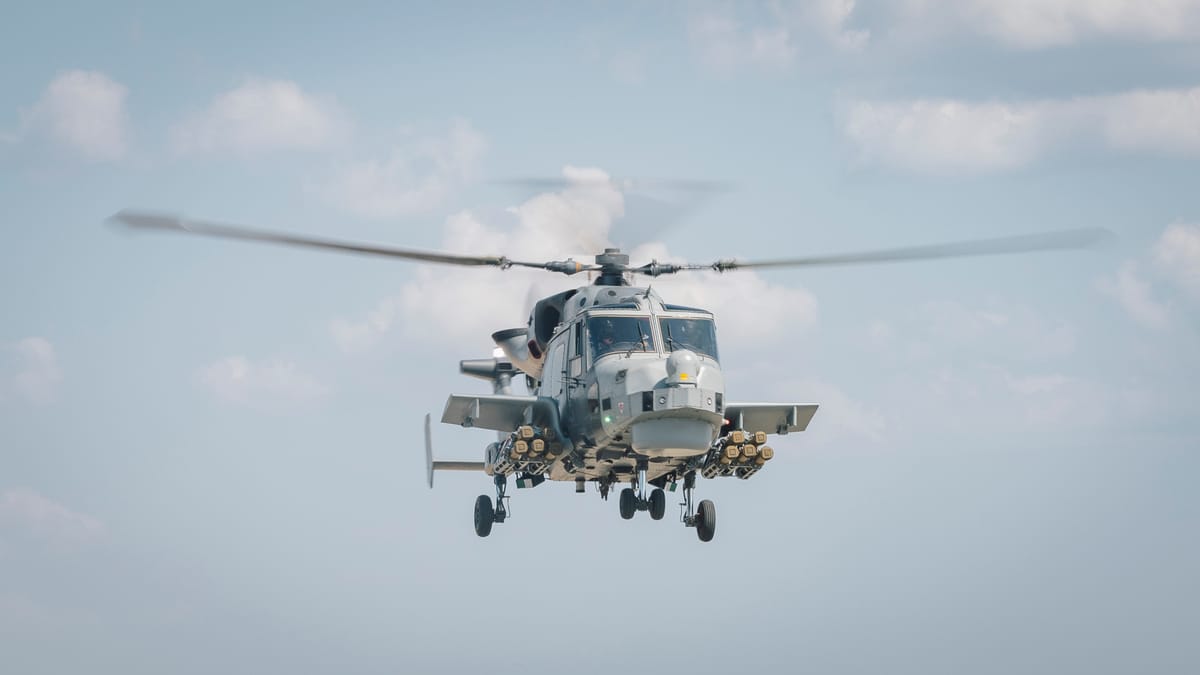
Central to this surge is the Lightweight Multirole Missile (LMM), also known as the Martlet. Manufactured by Thales UK in Belfast, the Martlet has become the "unsung hero" of recent threats, proving highly effective at intercepting low-flying, slow-moving drones (UAS) that often evade traditional high-end radar.
The MOD confirmed today that the UK intends to buy a significant additional stock of these missiles. This procurement is designed to:
- Refill British stocks currently being expended by RAF jets and Royal Navy ships in the region.
- Provide a direct supply to Gulf allies for their own defensive batteries.
- Facilitate a new training program where Gulf personnel will travel to the UK to master the system's deployment in complex environments.
The 'Ukraine Model' for the Gulf
In a notable shift in doctrine, the UK is pairing its own military experts with Ukrainian drone specialists to advise Gulf partners. Having spent two years countering Iranian-designed Shahed drones in Europe, the Ukrainians bring battle-tested data that is now being used to protect airports, hotels, and oil refineries in the UAE and Saudi Arabia.
Strategic Context: A Region Under Fire
The urgency of the London meeting follows a series of high-profile strikes that have shattered the Gulf’s image of "peace and luxury."
- March 1: A drone hit RAF Akrotiri in Cyprus.
- March 14: A major drone attack targeted Fujairah, the UAE’s main oil port.
- March 18: Iran’s Revolutionary Guards threatened counterstrikes on energy facilities in Saudi Arabia, the UAE, and Qatar following Israeli strikes on Iran’s South Pars gas field.
Allied Dispatch Analysis: The 'Arsenal of Democracy' Returns
This isn't just a sales meeting; it is a strategic pivot. By leveraging the new National Armaments Director (NAD), the UK is attempting to act as a "sovereign industrial partner" rather than just a vendor.
For Allied Dispatch UK readers, the takeaway is the speed of integration. The inclusion of defence tech startups alongside established primes suggests that the UK is looking for "disruptive" solutions—such as AI-directed jamming and low-cost interceptors—to counter the sheer volume of Iranian "scorched earth" tactics.